Every mehndi pattern tells a story. What appears as art is actually a coded language of emotion, belief, and identity. Each swirl, dot, and curve carries a meaning that connects generations of women, artists, and traditions.
In India and beyond, mehndi reflects celebration, love, and renewal. Its symbols evolve with time and unite beauty with meaning. The same creative energy thrives in unexpected places, where experiences like casino monopoly big baller turn design, color, and chance into an interactive art form that captures imagination and emotion alike.
The Symbolic Heart of Mehndi Art
Mehndi is more than decoration. It is heritage drawn on skin — an expression of love, protection, and fortune. Ancient Indian, Persian, and Middle Eastern cultures used henna to mark milestones such as weddings and births. Over centuries, motifs gained specific meanings that aligned with local rituals and beliefs.
Each design carries intention. Patterns are chosen with care to express joy, devotion, and renewal. The art connects generations through shared symbolism and visual storytelling. Modern artists keep these traditions alive and adapt them for new generations while preserving their essence.
Common Mehndi Motifs and Their Meanings
Each element in mehndi art carries intention. Understanding the language behind patterns helps you choose designs that express who you are and what you celebrate.
Peacock — Beauty and Grace
The peacock stands for elegance, love, and prosperity. Brides often choose it to symbolize joy, pride, and devotion. Its flowing feathers create a royal impression that makes every bridal design stand out.
Mandala — Balance and Eternity
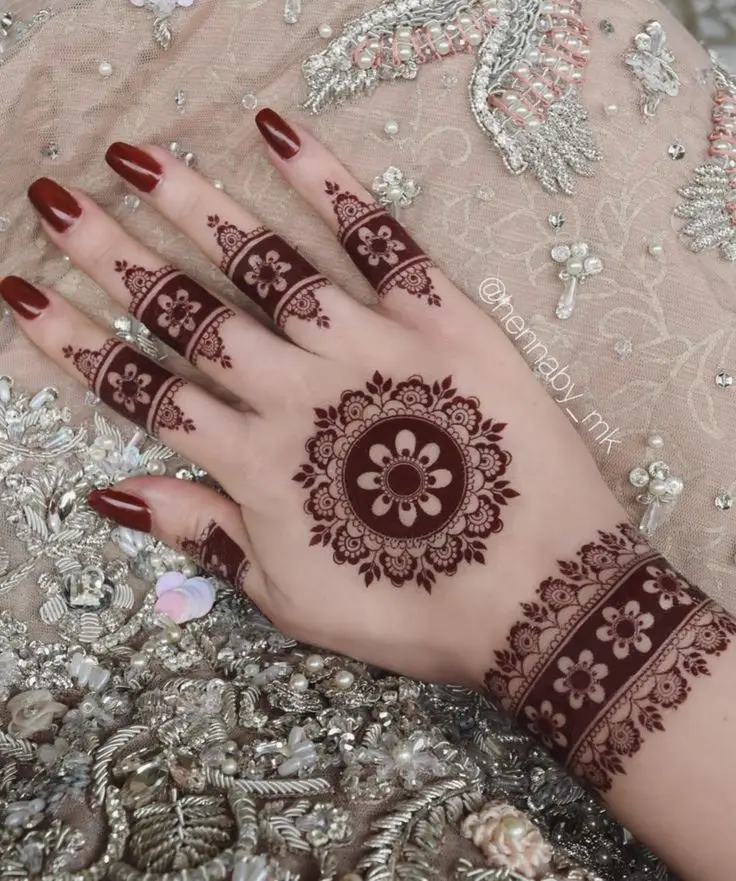
The mandala represents wholeness and spiritual harmony. Placed at the center of the palm, it channels calm and inner strength. Its circular form reflects life’s endless rhythm and the search for inner peace.
Paisley — Growth and Good Fortune
This classic motif represents fertility, creativity, and the cycle of life. Its curved form mirrors natural flow and renewal. The design’s timeless beauty links ancient art with modern interpretations.
Floral Patterns — Joy and Celebration
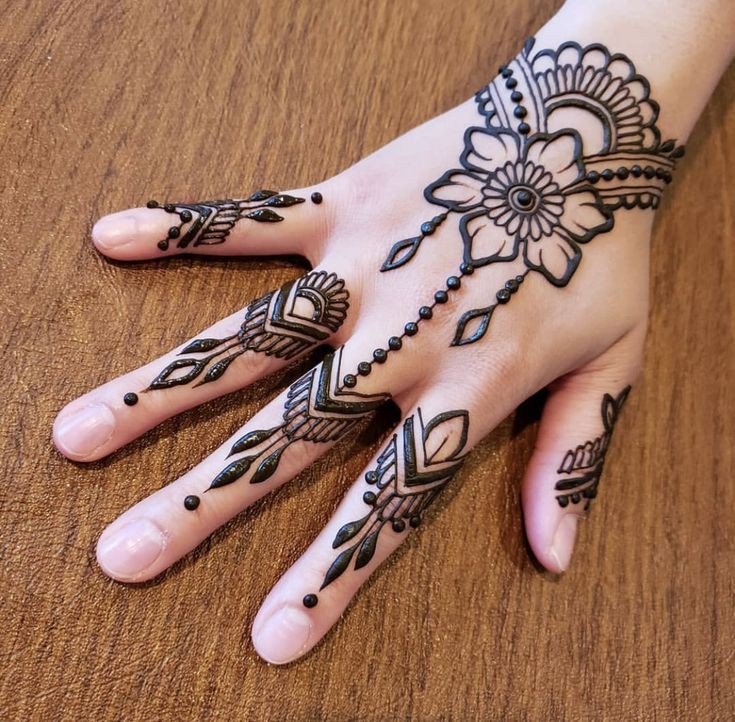
Flowers express happiness and feminine beauty. The lotus signifies purity, while roses represent affection and emotional depth. Each bloom adds freshness and charm and makes every hand a living garden.
Vines and Leaves — Connection and Growth
Linked vines show unity and expansion. They connect motifs into one continuous story across the skin. Their graceful flow symbolizes the bond between life, love, and continuity.
How Today’s Artists Reinvent the Old
Modern mehndi art blends tradition with innovation. Artists reinterpret heritage patterns through new mediums, tools, and personal stories. The goal is to keep symbolism alive while aligning with current aesthetics.
Popular reinventions include:
- Geometric minimalism: Clean lines inspired by mandalas and sacred geometry.
- Fusion styles: Arabic curves mixed with Indian density for balanced contrast.
- White and glitter mehndi: Experimental styles that match modern fashion.
- Personal icons: Initials, zodiac signs, or favorite flowers that tell a personal story.
- Destination themes: Motifs shaped by travel, from palm trees to architectural arches.
These variations prove that tradition never fades; it adapts. Artists keep the cultural meaning intact while adding individuality. Mehndi now bridges generations — heritage on one side, creativity on the other.
How to Choose the Right Motifs for You
The best mehndi design reflects both your story and the event’s spirit. Before selecting motifs, think about the message you want your art to share.
For weddings, choose symbols that express union — peacocks, vines, or bride-and-groom figures. For festive events, florals and paisleys radiate positivity and charm. Spiritual occasions often suit mandalas and lotus patterns that evoke peace and renewal.

Placement also changes the impact. Mandalas look powerful on palms, vines flow gracefully along arms, and floral chains complement feet. Combining several motifs builds depth while keeping a visual balance.
Artists recommend choosing 3–4 core symbols and repeating them in variations instead of mixing too many ideas. This consistency helps the design tell one story rather than several scattered ones.
A Pattern of Meaning
Every mehndi stroke carries memory and emotion. The art endures because it speaks through symbols that never lose relevance — love, growth, prosperity, and unity. Whether drawn for a wedding, a festival, or simple joy, each design reflects a connection between beauty and belief.
Mehndi lives in transition: ancient yet alive, personal yet universal. It celebrates how art can move across time without losing its essence. Each linked pattern deepens the narrative and guides every admirer toward the meaning behind the beauty.