
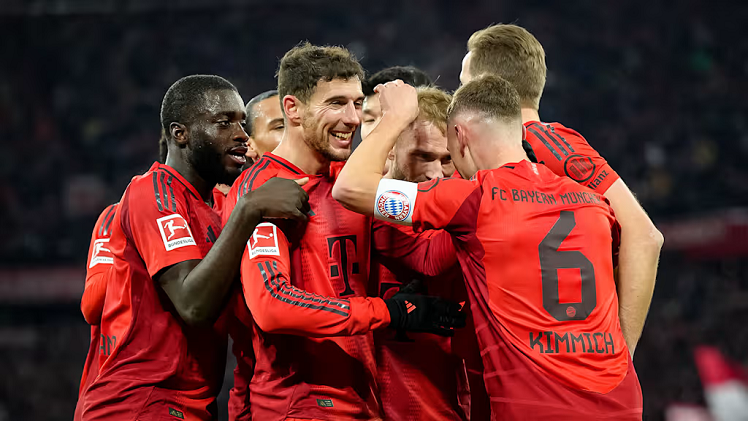
Goals scored in stoppage time are rarely random moments of chaos. In the Bundesliga, teams that consistently find the net late do so because of repeatable behaviors that intensify as matches approach their end. Fatigue, scoreline incentives, and structural commitment converge in the final minutes, creating conditions where pressure converts into decisive actions. Understanding why some teams excel in stoppage time requires tracing how late-game choices produce measurable outcomes.
Why Stoppage-Time Scoring Is a Pattern, Not Luck
Late goals emerge when teams sustain pressure beyond regulation rhythms. The cause is endurance and intent; the outcome is territorial dominance under fatigue; the impact is defensive breakdowns that occur after 90 minutes of attrition. Teams that score late plan for it by managing energy and substitutions to peak when opponents are most vulnerable.
Game-State Incentives That Escalate Late Pressure
As the clock runs down, incentives sharpen. Teams chasing points accept higher risk, while those protecting leads often retreat. This asymmetry increases shot volume and set-piece frequency near the box. The result is a compressed field where second balls and rebounds become decisive rather than build-up quality alone.
When Scoreline Asymmetry Drives Commitment
If a team needs a goal, it commits numbers forward, pins defenders, and sustains waves of attacks. The defending side, forced to clear repeatedly, loses structure and concedes territory—conditions that amplify late scoring probability.
Physical and Mental Fatigue as Catalysts
Fatigue alters decision speed and positioning. Tired defenders react later to cut-backs and crosses, while attackers anticipate second phases more aggressively. Mental fatigue compounds the issue, leading to misjudged clearances and late fouls that create dangerous restarts.
Before outlining the common fatigue-driven triggers, it is important to note these triggers often appear together, magnifying risk as stoppage time extends.
Slower recovery runs after repeated clearances
Reduced aerial timing on defensive headers
Late fouls near the box due to delayed reactions
Goalkeeper traffic congestion on set pieces
Interpreting these together explains why late goals cluster around corners, free kicks, and recycled attacks rather than open-play transitions alone.
Substitution Strategy and Late-Phase Impact
Teams that score late often time substitutions to maintain intensity. Fresh wide players increase crossing accuracy, while additional attackers crowd the penalty area. These changes are not reactive; they are scheduled to exploit fatigue windows. The outcome is improved delivery quality and finishing under reduced defensive control.
Set-Piece Volume and Second-Ball Control
Stoppage time inflates set-piece counts. Corners and free kicks become the primary delivery mechanisms, shifting the battle to aerial duels and loose-ball reactions. Teams that rehearse second-ball structures convert chaos into advantage by positioning runners outside the six-yard box and at the penalty spot.
A simplified comparison clarifies late-phase profiles.
The table shows that late goals follow pressure plus organization. Volume without structure rarely converts.
Reading Live Signals During Stoppage Time
From a live game reading perspective, the final minutes reveal intent quickly. Sustained box entries, repeated set pieces, and defender body language indicate whether pressure is compounding. Observers watch whether attacks are reset efficiently after clearances, a key marker of imminent breakthroughs.
In conditional scenarios where late pressure contradicts earlier match flow, analysts often reference UFABET while checking how live prices respond inside a football betting website interface. The objective is not to assume inevitability, but to see whether the betting environment acknowledges sustained stoppage-time dominance or continues to price the match as settled. Insight comes from adjustment speed relative to visible pressure.
When Stoppage-Time Trends Fail
Late scoring patterns fail when opponents manage time expertly. Slower restarts, disciplined clearances to touch, and smart fouls in low-risk zones can deflate momentum. Additionally, teams that lack aerial presence or delivery quality struggle to convert late pressure despite numerical commitment.
Late-Game Identity in Bundesliga
The Bundesliga’s high-intensity culture extends into stoppage time. Frequent transitions earlier in matches tax defenders, making late phases especially volatile. Teams that plan for this volatility—rather than react to it—reap consistent rewards at the death.
Summary
Bundesliga teams that frequently score in stoppage time do so through planned intensity, substitution timing, and set-piece dominance under fatigue. Late-game incentives and asymmetry create pressure, but conversion depends on structure and execution. Recognizing these patterns clarifies why some teams repeatedly decide matches after 90 minutes—by design rather than chance.
