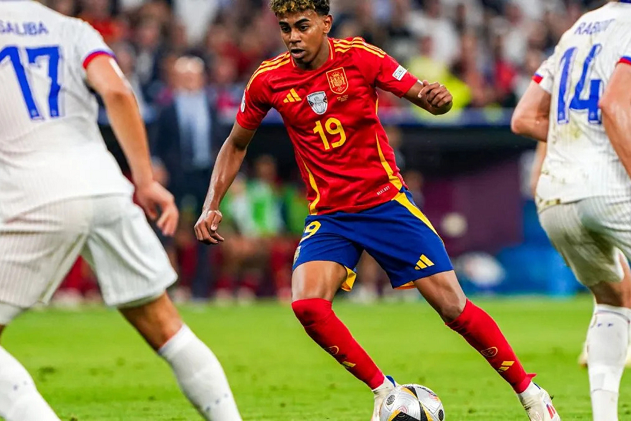
Spain’s evolution in recent years reflects a shift away from pure possession dominance toward a more balanced approach that incorporates physical intensity. For viewers watching full matches, this transformation is not always obvious in results but becomes clear in how Spain manages tempo, duels, and transitions throughout the game.
Opponents have adapted to Spain’s traditional style by compressing space and disrupting passing lanes. This forces Spain to introduce more verticality and physical presence, especially in midfield and defensive transitions, to avoid becoming predictable.
How Physicality Alters Their Midfield Structure
Spain now places greater emphasis on winning second balls and maintaining intensity after losing possession. Midfielders are expected not only to circulate the ดูบอลสด goaldaddy but also to engage in duels and recover quickly, changing the rhythm of their play.
What to Watch in Spain’s Build-Up Play
Spain’s buildup has become more varied, combining short passing sequences with quicker forward progression. Viewers should focus on how these elements interact rather than viewing them separately.
Observe how often Spain bypasses midfield with direct passes.
Track the positioning of central midfielders during transitions.
Notice whether wide players stretch the defense or move inside.
Watch how quickly possession turns into attacking movement.
Identify moments when physical duels interrupt passing flow.
These patterns show whether Spain is successfully blending control with intensity. A fluid transition between short and direct play indicates balance, while disjointed sequences suggest unresolved tension between styles.
The Trade-Off Between Control and Tempo
Increasing physical intensity can disrupt Spain’s traditional control. Faster transitions create more opportunities but also introduce risk, especially if defensive positioning is not fully synchronized.
When Tempo Undermines Stability
If Spain accelerates play without maintaining structure, gaps can appear between lines. Opponents exploit these spaces through quick counterattacks, reducing Spain’s ability to sustain pressure.
How Live Viewing Reveals Tactical Evolution
Watching matches in real time—especially through ดูบอลสด—makes it easier to see how Spain adjusts within different phases. You can observe when the team slows the game to regain control or increases tempo to exploit openings. These shifts highlight whether the balance between technical play and physicality is functioning effectively.
Comparing Spain’s Past and Present Identity
A comparison between Spain’s earlier style and its current approach highlights key differences in match behavior.
Era | Possession Style | Physical Intensity | Transition Speed Classic Spain | Dominant and patient | Low to moderate | Controlled Modern Spain | Balanced and adaptive | Higher | More variable
This comparison shows that Spain has not abandoned its identity but expanded it. For viewers, this means evaluating both how well the team controls possession and how effectively it handles physical challenges.
Where the New Approach Succeeds
Spain’s updated style works best against teams that press aggressively. The added physicality allows them to resist pressure and create opportunities in transition, making their play less predictable.
When the Balance Breaks Down
Against deep defensive blocks, increased physicality may not provide additional advantage. In these situations, Spain still relies heavily on precision and patience, and any loss of technical sharpness becomes more visible.
Summary
Spain’s search for balance between technical control and physical intensity is reshaping how their matches unfold. For viewers, understanding how these elements interact provides a clearer way to interpret performances and anticipate how the team will adapt in future games.